A control plane that recommends. You decide what ships.
Your whole team reads the same conversation-QA state from a workspace that runs on your infrastructure end to end.
$ hotato serve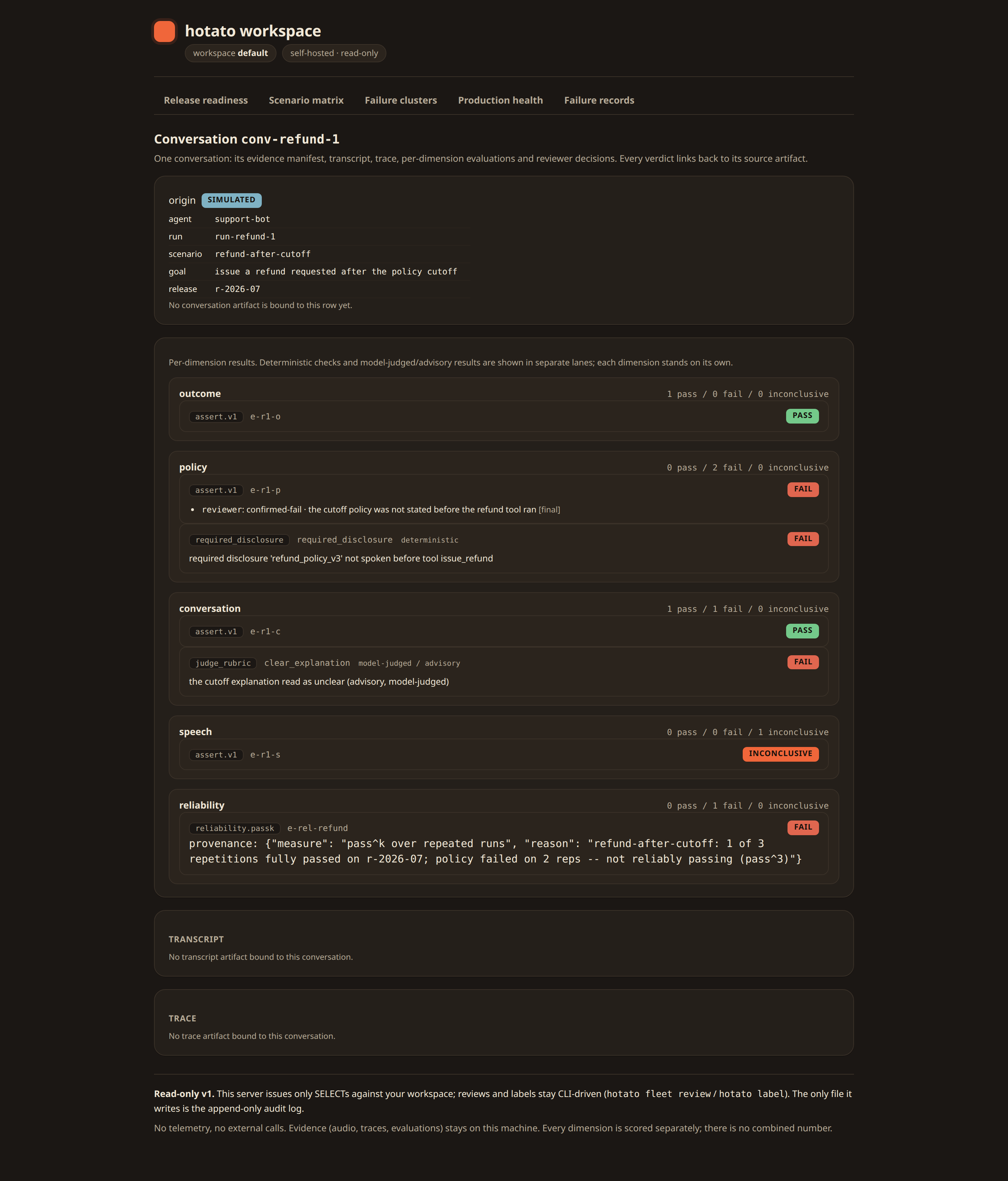
Five views, one instrument.
Release readiness, the scenario matrix, failure clusters, production health, and this inspector all read the same registry — each with a machine mirror at ?format=json, so an agent drives the workspace without scraping HTML.
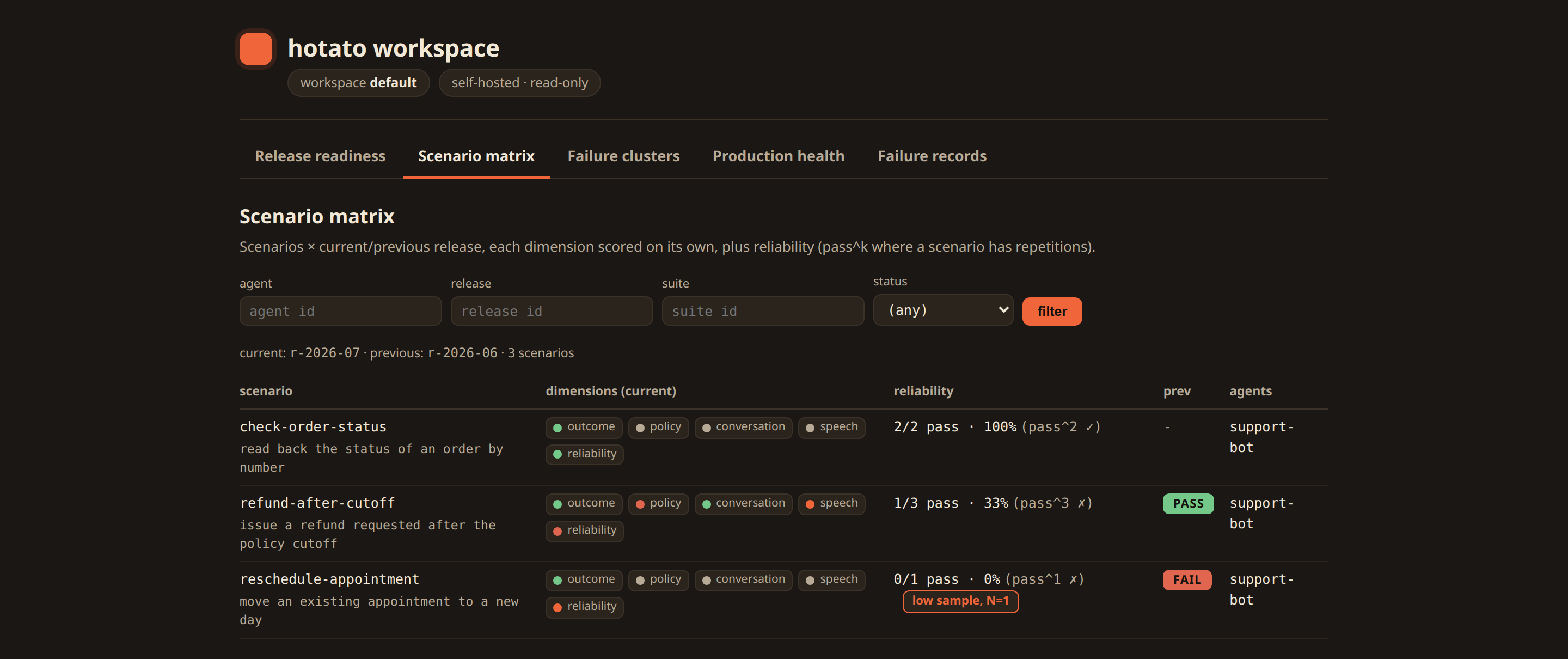
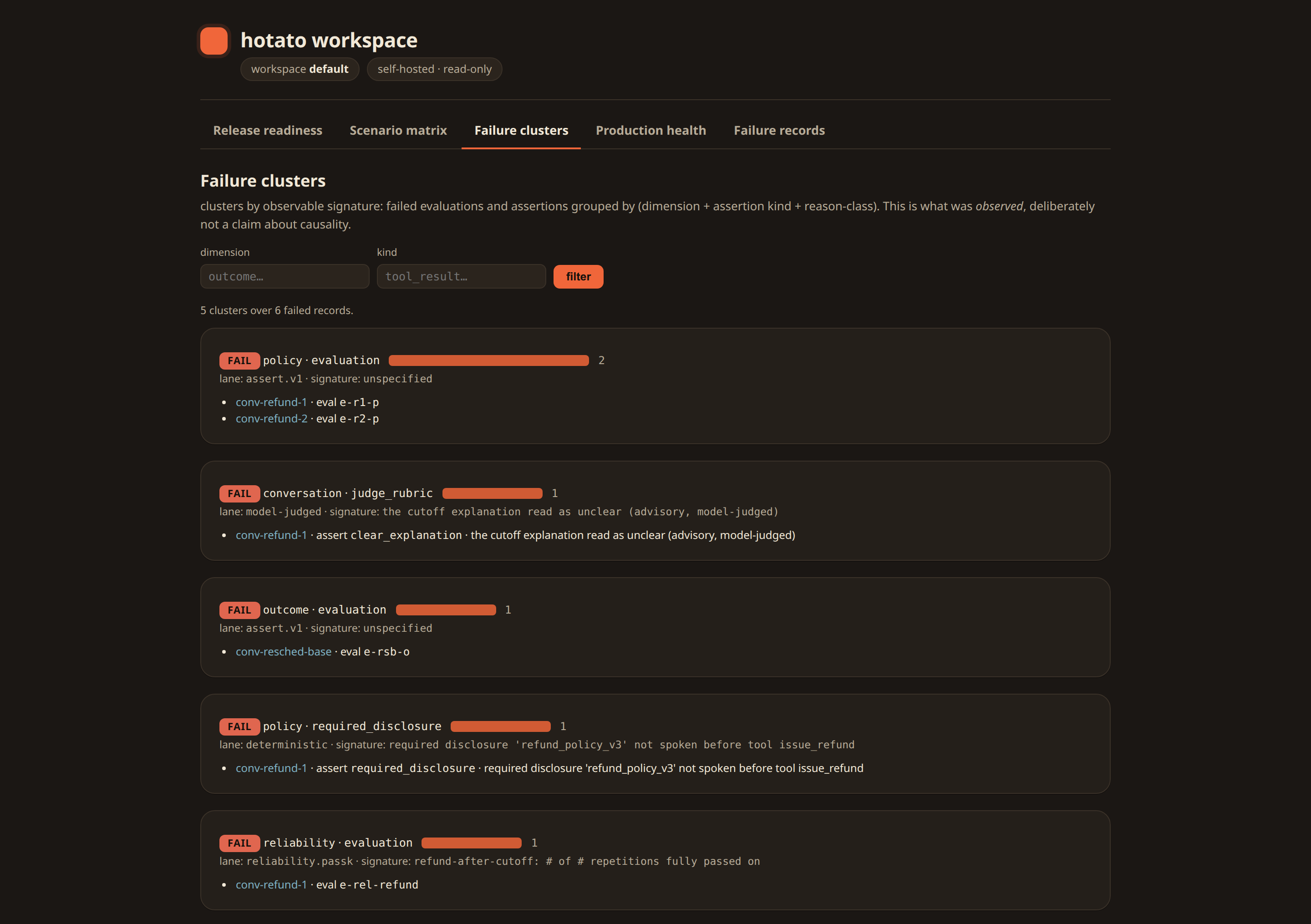
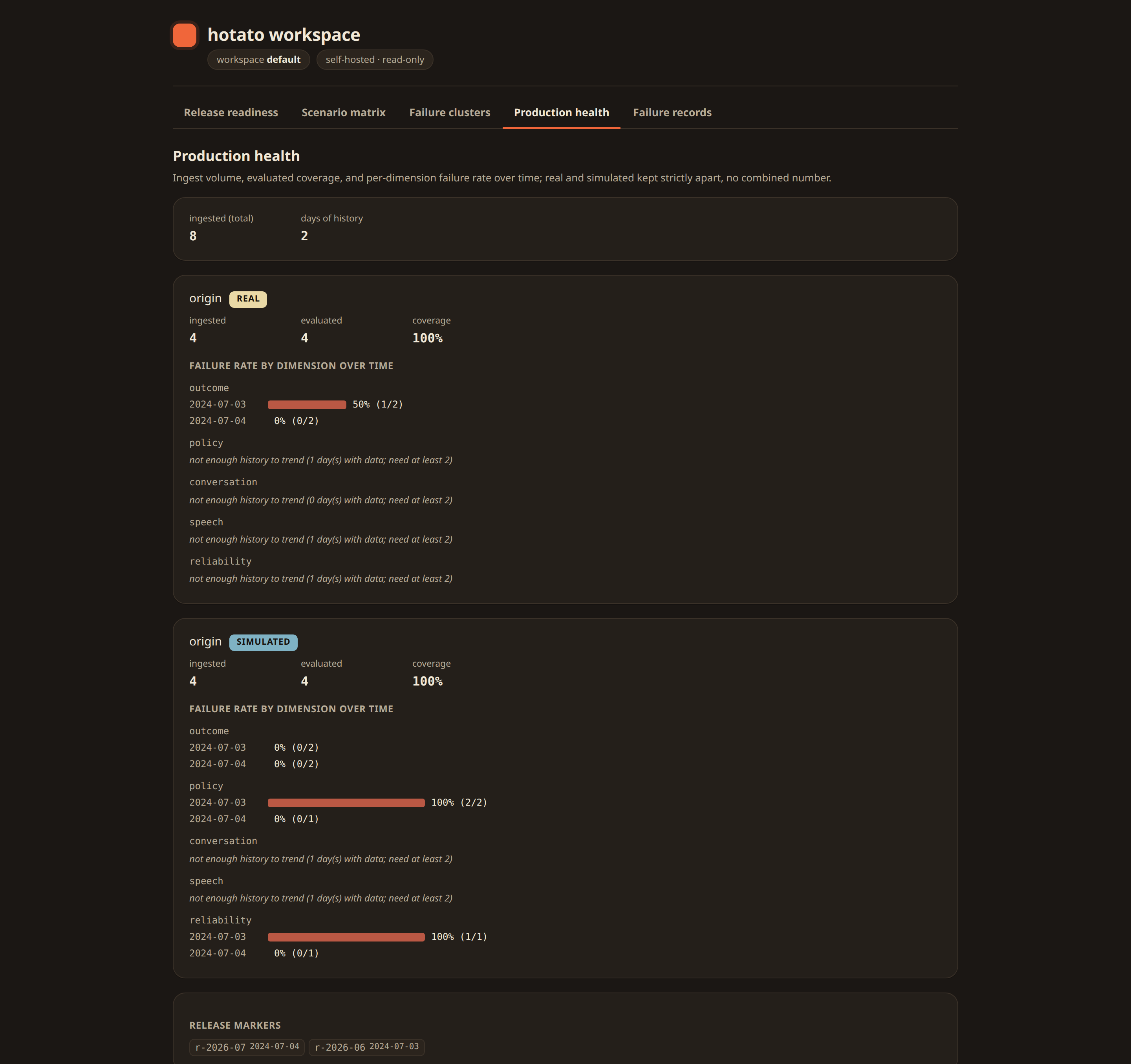
Release readiness sits on the front page. Self-host the workspace →
In your VPC, on loopback, kept apart.
The server binds 127.0.0.1 unless you tell it otherwise, checks one bearer token in constant time, and opens only a listening socket.
Stdlib-only — http.server plus sqlite3 — so a zero-egress test can whitelist loopback and hold every view to it. Recorded and simulated calls compute apart everywhere, and a thin sample stays flagged as low sample, N=3. Redacted transcript segments render as [redacted] in the HTML and the JSON mirror alike, and every request appends one line to an audit log, recording only a token prefix.
$ docker compose up -d
Creating network hotato_default   ... done
Creating hotato-workspace         ... done
Serving http://127.0.0.1:8321 · bearer token required

Your whole team, one registry.
Bundled recordings, a per-dimension scorecard, and the same self-hosted workspace, in one command.
$ uvx hotato start --demo
One recording is enough to start. Get started →